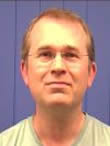
Alan Watson is the Leader of the Birmingham
DUNE
group and of the
ATLAS Level-1 Calorimeter Trigger project (L1Calo) within the UK.
His main area of work is in triggering and data acquisition for high-energy physics
experiments. He has worked on the design and optimisation of calorimeter-based triggers
for the Large Hadron Collider since the early days of the project, as a member of the RD27
R&D project and the EAGLE collaboration, which later merged with ASCOT to form ATLAS. His
specialism is in the design of algorithms to identify features, such as candidate
electrons, photons, taus or jets, but he also contributed to the design of the overall
architecture and to other elements of the processing, as well as being the offline
software coordinator for the project and lead developer of the L1Calo Monte Carlo
simulation. He is currently UK project leader for the L1Calo collaboration, and was for
many years the ATLAS Team Leader at Birmingham. He has also worked on a range of physics
topics, mainly in heavy flavour or electro-weak physics but also in Higgs searches and
studies. A major focus of his work in ATLAS in the coming years will be the upgrades of the
trigger planned for LHC Run 3 in 2021 and the High-Luminosity LHC in 2026.
He has recently formed a group at Birmingham who have joined the DUNE experiment (Deep
Underground Neutrino Experiment), which is to be built at
Fermilab and the
Sanford
Underground Research Facility (SURF) in South Dakota in the early 2020s.
This experiment will study neutino mixing, searching for CP violation and intending to resolve the neutrino mass hierarchy,
as well as searching for nucleon decays and being studying
neutrino emissions from supernova events within the galaxy. The Birmingham group's main
contributions to the construction of the experiment will be in the area of data acquisition, both hardware and
software, for the large liquid argon time projection chambers that will make up the "far
detector", 1.5km underground at SURF.
His previous projects include the
BaBar experiment at
SLAC,
the
OPAL experiment at
LEP
(CERN),
and (showing his age) the TASSO experiment at PETRA (
DESY).
He is currently teaching second year particle and nuclear physics and supervising final
year projects. He has served as head of both first and fourth years of the undergraduate
programmes in the School, as a member of the School's Learning and Teaching Committee,
Syllabus Committee, Staff-Student Committee and Postgraduate Studies Committee, and has
taught a range of modules across all years of the School's degree programmes.